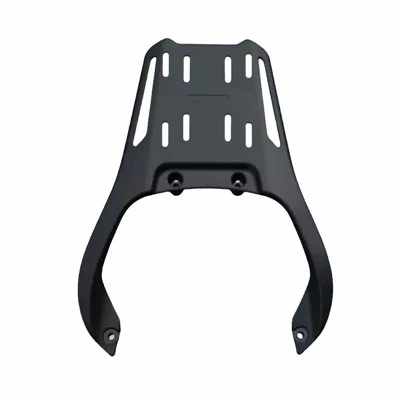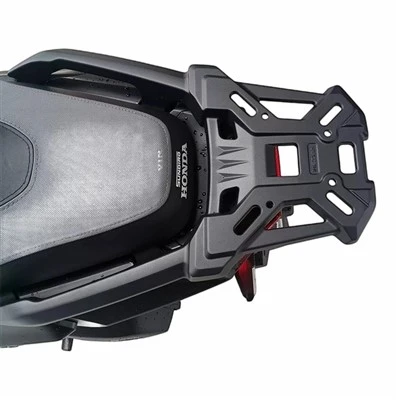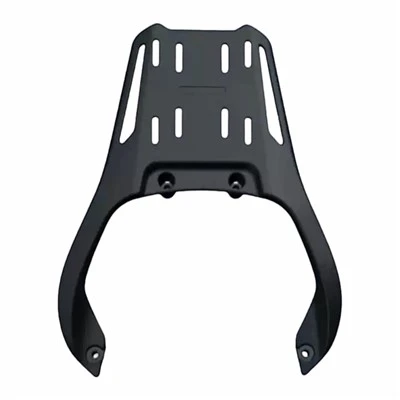

Whether or not you need to register a replacement rear luggage rack on your motorcycle depends on the specific circumstances. The core principle is determining whether the modification alters the vehicle's registered structure, configuration, or characteristics. Details are as follows:
Situations Requiring Registration
According to Article 16 of the *Road Traffic Safety Law of the People's Republic of China*, no entity or individual may alter the registered structure, configuration, or characteristics of a motor vehicle without authorization. You must register the modification if it involves the following:
Alteration of vehicle structure or configuration: For example, installing a rear rack that is larger in size, heavier in material, or significantly different in design-thereby changing the vehicle's center of gravity, load-bearing capacity, or appearance compared to its registered specifications.
Alteration of vehicle characteristics: This includes changes to the vehicle's rear profile (such as adding extension brackets or relocating taillights), obstructing the license plate, or interfering with the proper function of safety equipment (e.g., rearview mirrors or turn signals).
Legal consequences: Unauthorized modifications may result in fines (typically 200–500 RMB), an order to restore the vehicle to its original state, or even the impoundment of the vehicle.
Registration process: The owner must bring their ID card, the motor vehicle registration certificate, the vehicle license, and the modified motorcycle to the local vehicle administration office to apply for a registration change. The office will inspect the modification for legality and compliance (e.g., checking for 3C certification and ensuring it does not compromise driving safety). If the modification meets the standards, the vehicle license and registration certificate will be updated.
Situations Not Requiring Registration
Registration is generally not required if the replacement rear rack meets the following conditions:
Replacement with an identical model: The new rack is identical to the original in terms of size, material, and design, and is being installed solely due to damage or wear.
No alteration of vehicle characteristics: The rack does not obstruct the license plate, interfere with the function of safety equipment, or change the vehicle's rear profile.
Retention of documentation: Ensure that the model of the new rack matches the original, and keep proof of purchase (such as invoices or certificates of conformity) available for potential inspection. Recommendation: If you are unsure whether a formal registration update (filing) is required, you may bring your vehicle registration certificate, vehicle license, and the new rear rack to the local vehicle administration office for clarification, thereby avoiding any potential legal violations due to oversight.
Key Reminders
Prioritize Legality: Even if no formal registration update is required, any replacement rear rack must comply with national standards (such as GB 7258, "Technical Specifications for Motor Vehicle Operating Safety"). The use of substandard or non-compliant products is prohibited.
Safety Implications: The load-bearing capacity of the rear rack must be compatible with the vehicle's design specifications; overloading can lead to a loss of vehicle control or structural damage.
Regional Variations: Some cities may enforce stricter local regulations regarding motorcycle modifications; it is advisable to research local policies in advance.