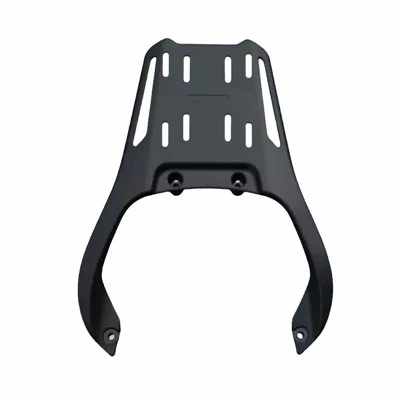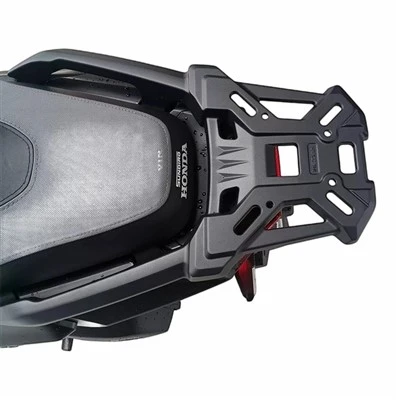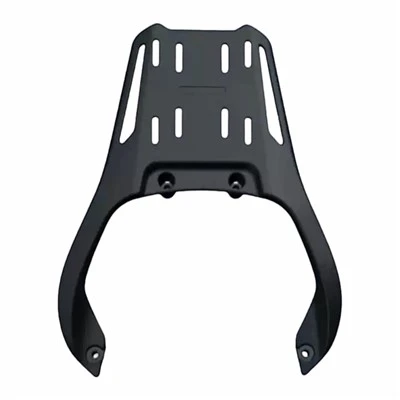

A motorcycle luggage rack is far more than just a "welded piece of metal." It functions as an integral component of a force-balancing system. When a top case, saddlebags, or other elongated cargo are added, the center of gravity shifts rearward. The original factory tail structure often lacks the necessary lateral torsional rigidity and vertical support points to handle this; under sustained stress, it can lead to loose taillight brackets, cracked tail fairings, or even negatively affect the performance of the rear suspension.
A well-designed rack must meet three criteria: first, it should form a stable triangular structure with the motorcycle's main frame; second, it must feature versatile, redundant bolt-hole patterns to accommodate the specific mounting points of different bike models; and third, it must be constructed from materials with a yield strength capable of withstanding dynamic loads exceeding 15kg without significant deformation. Achieving this requires a solid grasp of engineering principles, including metal stress distribution, vibration-damping pathways, and the optimal weight distribution for the vehicle as a whole.